
2026 Midterm Elections: Democrats Seize Control of Congress as Historic Republican Defeat Reshapes Washington

Democrats capture the House and Senate in a sweeping national victory, delivering a major setback to President Donald Trump as close races in Mississippi, Alaska and Colorado remain unresolved.
NEWS BLEND 360 | WASHINGTON | NOVEMBER 4, 2026
The political landscape of the United States has undergone a dramatic transformation following the November 3, 2026, midterm elections, with Democrats securing control of both chambers of Congress in one of the most consequential electoral reversals in recent American history.
What began as a nationwide contest over the economy, government accountability, foreign policy and the direction of the country ended with Republican losses extending far beyond traditional political battlegrounds.
Democrats captured key congressional districts, overturned Republican-held Senate seats and delivered surprising victories in states that President Donald Trump carried just two years earlier.
For the White House, the results represent a significant challenge to the president's remaining two years in office.
For Democrats, the election opens the door to a new congressional agenda centered on economic affordability, healthcare protections and increased oversight of the Trump administration.
Yet even as Democratic leaders celebrated their victories, election officials continued counting ballots in several closely contested races that could further expand the party's congressional majority.
Democrats Capture Both Chambers of Congress
The most significant development of election night was the Democratic Party's successful effort to reclaim the United States House of Representatives and Senate.
Democrats crossed the 218-seat threshold required for a House majority while also securing a Senate majority of at least 54 seats, including independents who caucus with the party.
The victories mark a major reversal from the Republican control of Washington following Trump's return to the presidency in January 2025.
The Senate results were particularly striking.
Democratic candidates flipped Republican-held seats in seven states:
Texas
Ohio
Iowa
Kansas
Maine
North Carolina
South Carolina
Several of these victories occurred in states where Republicans had maintained longstanding political advantages.
In Texas, Democrat James Talarico defeated Republican Ken Paxton, delivering the state's first Democratic U.S. Senate election victory since 1988.
In Kansas, Democrat Adam Hamilton defeated incumbent Republican Senator Roger Marshall, breaking a decades-long pattern of Republican Senate victories.
Former North Carolina Governor Roy Cooper secured a Democratic Senate victory, while former Ohio Senator Sherrod Brown returned to the Senate after defeating Republican Jon Husted.
In Maine, Troy Jackson defeated longtime Republican Senator Susan Collins.
Together, the results demonstrate the extent to which the national political environment shifted against Republicans during the 2026 election cycle.
President Trump Distances Himself From Republican Defeat
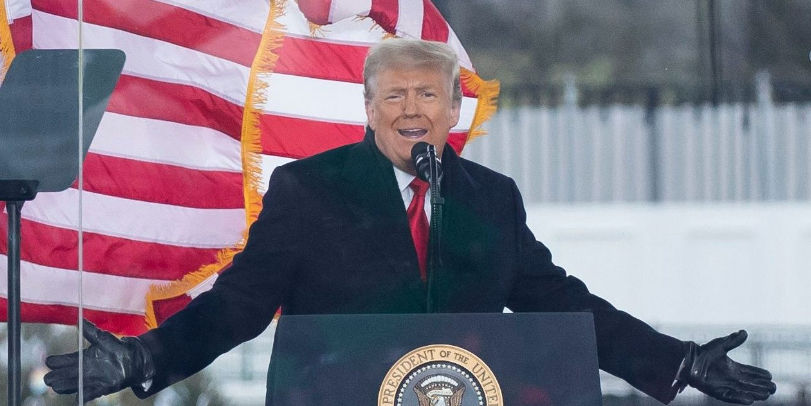
As Democratic celebrations unfolded across the country, President Donald Trump faced questions about the Republican Party's unexpected losses.
Throughout the campaign, Trump had encouraged supporters to treat the midterms as a referendum on his leadership, urging voters to imagine that his name appeared on the ballot.
Following the results, however, the president emphasized that he was not personally running for office.
Trump also acknowledged that Republican candidates had encountered a difficult political environment and credited Democrats with conducting effective campaigns.
The shift in messaging highlighted an emerging debate within Republican circles over responsibility for the party's defeat.
Some Republicans pointed toward individual candidates and campaign strategy, while others increasingly questioned whether the administration's economic and foreign policy decisions had damaged the party's standing with voters.
Trump has indicated a willingness to work with Democratic leaders, although major differences over spending, healthcare, immigration and presidential authority could make bipartisan cooperation difficult.
The Economy and Iran War Become Defining Election Issues
Economic uncertainty emerged as one of the most important issues influencing voter decisions.
Throughout the campaign, Americans expressed concerns about the cost of groceries, gasoline, housing and healthcare.
Despite promises of economic improvement, many households continued experiencing financial pressure.
The ongoing U.S.-Israeli war involving Iran also became a significant political issue.
The conflict, which had continued for approximately eight months, contributed to higher energy prices and intensified public debate over American military involvement overseas.
President Trump acknowledged Wednesday that the conflict and associated gasoline prices had hurt Republican candidates.
Vice President JD Vance similarly identified the war as a central factor in the party's electoral defeat.
The election results suggest that foreign policy decisions can carry substantial domestic political consequences, particularly when military involvement intersects with the everyday cost of living.
Voter dissatisfaction was not limited to economic issues.
Concerns about government ethics, presidential accountability and the balance of power between Congress and the White House also shaped the national debate.
According to the Associated Press voter survey, approximately seven in ten voters believed Congress was not doing enough to provide checks on presidential power.
That sentiment could become one of the defining forces behind the incoming Democratic majority.
Mississippi Senate Race Remains Too Close to Call
While Democrats have already secured control of the Senate, attention remains focused on Mississippi, where one of the closest races in the country has yet to produce a declared winner.
Democratic challenger Scott Colom is locked in an extraordinarily tight contest against incumbent Republican Senator Cindy Hyde-Smith.
As Wednesday's vote counting continued, the candidates were separated by an exceptionally small number of votes.
Outstanding provisional and other eligible ballots could determine the final outcome.
Mississippi has traditionally been considered a reliably Republican state in federal elections.
A Democratic victory would therefore represent another remarkable political reversal in an election already defined by unexpected results.
However, neither candidate should be considered the winner until the remaining ballots are processed and the outcome is established.
The race could also face legal challenges or recount-related proceedings if the final margin remains exceptionally narrow.
Alaska Could Add Another Democratic Senate Victory
Alaska is another state where the Senate outcome remains unresolved.
Democrat Mary Peltola is challenging Republican incumbent Dan Sullivan in a race that remains too close to call.
Alaska's election system adds another level of complexity because the state uses ranked-choice voting.
If no candidate receives more than 50 percent of the initial vote, ballots are evaluated through additional rounds of ranked-choice tabulation.
The state also permits certain ballots from overseas voters to arrive after Election Day.
Although the Alaska result will not change which party controls the Senate, it could determine the final size of the Democratic majority.
Colorado Vote Counting Continues in Competitive House Races
Colorado has become another important focus of the post-election vote count.
Democrats performed strongly across the state, winning major statewide contests and making significant gains in congressional elections.
However, several House districts remain unsettled.
In Colorado's 4th Congressional District, Democratic challenger Eileen Laubacher holds a narrow unofficial lead over Republican Representative Lauren Boebert.
The contest has attracted national attention because Boebert has been one of the Republican Party's most recognizable conservative figures.
In the 3rd Congressional District, Republican incumbent Jeff Hurd is fighting to retain his seat against Democrat Dwayne Romero.
In the 5th Congressional District, Democrat Jessica Killin leads Republican incumbent Jeff Crank as election officials continue processing ballots.
A victory for Killin would represent a historic Democratic breakthrough in a district long associated with Republican representation.
Democrat Manny Rutinel has already defeated Republican Representative Gabe Evans in Colorado's competitive 8th Congressional District.
The remaining Colorado results will help determine the precise size of the Democratic majority in the House.
Democrats Deliver Major Victories in Governors' Races
The Democratic wave also extended beyond Congress.
Several Republican-held governorships changed hands, illustrating the national reach of the party's electoral gains.
Among the most significant outcomes:
Texas: Democrat Gina Hinojosa defeated Republican Governor Greg Abbott, becoming the state's first Latina governor-elect and ending more than three decades of Republican control of the governor's office.
Georgia: Former Atlanta Mayor Keisha Lance Bottoms won the governorship, becoming the state's first Black female governor-elect.
Ohio: Democrat Amy Acton defeated Republican candidate Vivek Ramaswamy, delivering another major statewide victory for Democrats.
Iowa: Democrat Rob Sand won the governor's race, breaking Republican control of the office.
Nevada: Democrat Aaron Ford defeated Republican incumbent Joe Lombardo.
These victories signal potential shifts in state-level policymaking involving education, voting laws, healthcare, economic development and public safety.
Historic Firsts Mark the 2026 Elections
Beyond the partisan changes, the election produced several important milestones in American political representation.
The incoming Congress is expected to include the nation's first Native American woman senator, first Muslim senator and first openly gay male senator.
Minnesota Lieutenant Governor Peggy Flanagan won election to the Senate, becoming the first Native American woman elected to the chamber.
Michigan Democrat Abdul El-Sayed won his Senate contest, becoming the first Muslim elected to serve in the United States Senate.
The election results also position House Democratic Leader Hakeem Jeffries to make history.
If elected by his colleagues when the new Congress convenes, Jeffries would become the first Black speaker of the U.S. House of Representatives.
His potential elevation would represent a significant milestone in the history of congressional leadership.
What Democratic Control Means for President Trump's Final Two Years
The incoming Congress will substantially change the balance of political power in Washington.
Republicans will retain control of the White House, but Democrats will control both chambers of the legislative branch beginning in January 2027.
That arrangement will create a divided federal government.
Democratic lawmakers will gain increased authority over congressional investigations, committee hearings, federal spending negotiations and legislative priorities.
The Senate majority will also give Democrats significant influence over presidential appointments requiring confirmation.
Meanwhile, the House will have greater power to initiate investigations and demand documents from federal agencies.
Democratic leaders have indicated that their priorities will include:
Reducing living expenses for American families.
Protecting access to affordable healthcare.
Reviewing federal spending and government contracts.
Investigating potential misconduct within the executive branch.
Strengthening congressional oversight of presidential authority.
Reassessing domestic and foreign policy priorities.
However, the president will retain his constitutional veto power.
Major legislation will therefore require negotiations between Democratic congressional leaders and the Republican White House, or sufficient votes to overcome presidential opposition.
The possibility of political gridlock remains significant.
A Political Warning for Both Parties
Although Democrats emerged as the clear winners of the 2026 midterms, the results also present challenges for their party.
Many voters who supported Democratic candidates expressed frustration with the direction of the country rather than unconditional loyalty to the Democratic Party.
That distinction could become important as the new congressional majority attempts to translate its electoral success into policy.
Voters who demanded change will now expect measurable improvements.
For Republicans, the losses are likely to trigger internal discussions about party leadership, candidate selection, economic messaging and the influence of President Trump.
The results may also accelerate early conversations about the Republican Party's future beyond Trump's presidency.
For Democrats, the opportunity is equally significant.
The party has gained the institutional authority to challenge the administration, propose legislation and establish an alternative governing agenda ahead of the 2028 presidential election.
But maintaining that momentum will depend on how effectively Democratic lawmakers respond to the economic and political concerns that brought them back into power.
What Happens Next?
Election officials across the country will continue processing outstanding ballots and certifying results over the coming days and weeks.
Particular attention will remain on Mississippi and Alaska's Senate contests, along with Colorado's closely contested House races.
Although these outstanding elections could affect the final margins, they will not reverse the Democratic Party's overall control of Congress.
The newly elected members are scheduled to take office when the 120th Congress convenes on January 3, 2027.
Until then, Republicans retain their existing congressional authority.
The transition will give both parties time to prepare for a substantially different political environment in Washington.
The Bigger Picture
The 2026 midterm elections delivered a message extending beyond any individual congressional seat or political party.
Millions of Americans went to the polls amid concerns about household finances, international conflict, government accountability and the country's political future.
The outcome produced a sweeping shift in congressional power and demonstrated that even states traditionally considered secure for one party can become competitive under changing national conditions.
For President Trump, the results establish new political obstacles during the final two years of his second term.
For Democrats, they create an opportunity to demonstrate whether their congressional majority can deliver meaningful change.
And for American voters, the election reinforces a fundamental reality of the democratic process: political authority is never permanently guaranteed.
As the final ballots are counted, one conclusion is already clear. The 2026 midterms have reshaped the balance of power in Washington, setting the stage for a new chapter in American politics.
News Blend 360 will continue monitoring outstanding congressional races, official election certifications and developments involving the incoming Congress.
Editor's note: This report reflects election projections and publicly reported results available November 4, 2026. Outstanding results are unofficial and subject to updates.


Comments