
GLOBAL SCIENCE BREAKTHROUGHS SIGNAL A DEFINING MOMENT FOR HUMAN KNOWLEDGE

News Blend 360 | Science Desk
From the farthest reaches of deep space to the hidden workings of the human brain, scientists across the globe are reporting discoveries that are reshaping our understanding of the universe, human identity, and life on Earth. Researchers say the convergence of advanced technology, artificial intelligence, and cross-disciplinary collaboration is accelerating scientific progress at a pace unseen in modern history.
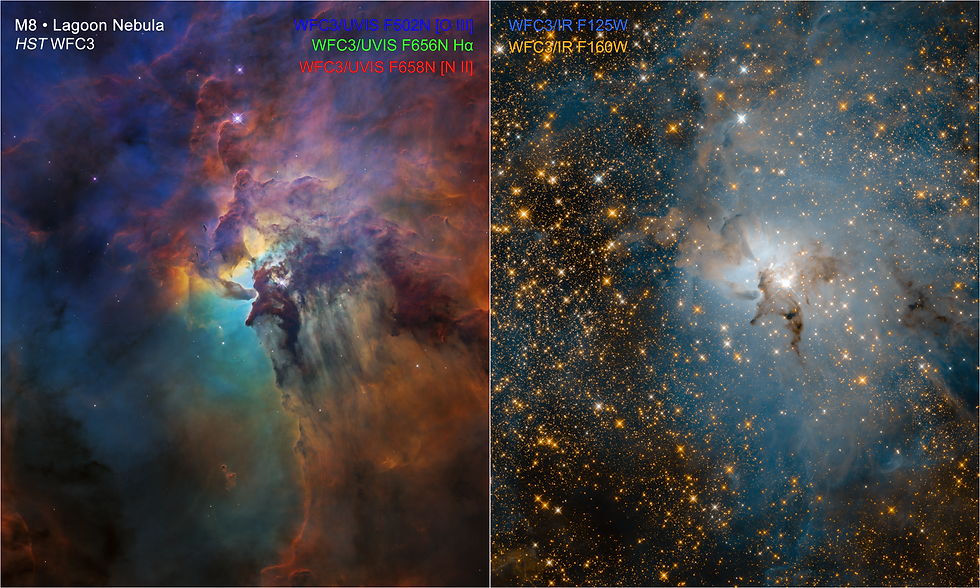
Astronomers using next-generation space telescopes are capturing unprecedented views of dying stars, planetary nebulae, and cosmic dust clouds. These observations are revealing how stars shed material into space—elements that eventually form planets and, ultimately, life itself.
Scientists say these findings not only deepen our understanding of stellar evolution but also help answer long-standing questions about how galaxies recycle matter across billions of years. The research highlights the intricate processes involved in the life cycles of stars, illustrating how they forge elements in their cores through nuclear fusion. When these stars reach the end of their lives, they explode in spectacular supernova events, dispersing these newly created elements into the interstellar medium. This material, enriched with heavier elements, can then be incorporated into new star systems, planets, and ultimately, the very building blocks of life.
Researchers emphasize that these discoveries bring humanity closer to understanding the origins of the building blocks that make life possible. By studying the remnants of ancient stars and the gas clouds that give rise to new generations of stars, scientists can trace the pathways of elements like carbon, oxygen, and nitrogen—essential ingredients for life as we know it. This research not only sheds light on the chemical processes that lead to the formation of life but also provides insights into the broader cosmic cycle of matter, illustrating how galaxies act as vast recycling centers over immense time scales.
Furthermore, the implications of these findings extend beyond our own galaxy, as they can be applied to understand the evolution of galaxies throughout the universe. By comparing data from various galaxies, researchers can gain a clearer picture of how different environments influence stellar evolution and element formation. This comparative approach allows scientists to refine their models of galaxy formation and evolution, providing a more comprehensive view of how the universe has changed over billions of years.
In summary, the significance of these findings lies not only in their contribution to our understanding of stellar processes but also in their potential to answer fundamental questions about the universe's history and the origins of life itself. As we continue to unravel these cosmic mysteries, we move closer to grasping our place in the universe and the intricate connections that bind us to the stars.
NEUROSCIENCE: MAPPING THE BOUNDARIES OF THE SELF

In a major advancement in brain science, neuroscientists have identified specific brainwave patterns that are intricately linked to how humans perceive their bodies and define their personal identity. This groundbreaking research involves a detailed analysis of neural signals, allowing researchers to delve into the complex mechanisms by which the brain distinguishes the concept of “self” from the external world around it. Through advanced imaging techniques and sophisticated data analysis, scientists have been able to map out the unique brainwave signatures that correspond to self-awareness and body perception, shedding light on the intricate workings of human consciousness.
The implications of this research are profound and far-reaching. Experts in the field assert that these findings could revolutionize treatment approaches for a variety of neurological disorders, including conditions such as schizophrenia, dissociative disorders, and body dysmorphic disorder, where the perception of self can become distorted. Moreover, this knowledge holds promise for addressing trauma-related conditions, such as post-traumatic stress disorder (PTSD), where an individual’s sense of self can be significantly impacted by their experiences. By understanding the neural correlates of identity and self-perception, clinicians may develop more effective therapeutic interventions tailored to restore a healthy sense of self in affected individuals.
Additionally, the potential applications of this research extend beyond mental health treatment. As scientists continue to explore the intricate relationship between brain function and human consciousness, this understanding may play a critical role in the ethical development of artificial intelligence and brain-computer interfaces. These technologies, which aim to bridge the gap between human cognitive processes and machine learning, require a deep comprehension of where human consciousness begins and ends. By mapping the neural pathways associated with self-perception, researchers can better inform the design of AI systems that respect and align with human values and identities.
Furthermore, this research opens up new avenues for exploring philosophical questions surrounding identity and consciousness. As we begin to unravel the neural basis of self-awareness, we are prompted to consider what it truly means to be human and how our identities are constructed through both biological and experiential lenses. This intersection of neuroscience and philosophy could lead to a richer understanding of human nature and the complexities of the mind, paving the way for future studies that further investigate the nuances of consciousness and personal identity.
DNA & ARCHAEOLOGY: HISTORY REWRITTEN AT THE GENETIC LEVEL

Breakthroughs in ancient DNA analysis are rewriting long-held assumptions about human migration and identity, fundamentally altering our understanding of how ancient populations interacted and evolved over time. Recent studies involving genetic material extracted from Roman-era remains found across various sites in Europe are revealing a far more intricate tapestry of population histories than scholars had previously believed possible. These advancements in genetic research are shedding light on the complexities of demographic shifts, migrations, and the intermingling of different ethnic groups throughout history.
Researchers assert that these groundbreaking findings demonstrate how genetics is emerging as one of archaeology’s most powerful tools, capable of confirming, challenging, or completely overturning established historical narratives that have persisted for decades or even centuries. By analyzing ancient DNA, scientists can trace lineage and ancestry with remarkable precision, enabling them to construct a more accurate picture of human interactions in the past. This genetic evidence not only provides insight into individual identities but also reveals patterns of migration and settlement that were previously obscured by the limitations of traditional archaeological methods.
Moreover, the work stemming from these studies is providing a clearer picture of how ancient civilizations were interconnected through various means, including trade, movement, and cultural exchange. The genetic data indicates that populations were not static; rather, they were dynamic and fluid, with individuals frequently moving across regions, leading to a rich exchange of ideas, technologies, and cultural practices. This interconnectedness challenges the notion of isolated societies and highlights the complexity of human relationships throughout history.
As researchers continue to delve into the genetic makeup of ancient populations, they are uncovering evidence of previously unknown migrations and interactions. For instance, the analysis of Roman-era remains has revealed genetic markers indicative of North African, Middle Eastern, and even sub-Saharan ancestry, suggesting that the Roman Empire was a melting pot of diverse cultures and peoples. This genetic diversity not only enriches our understanding of the Roman world but also emphasizes the importance of looking beyond traditional historical narratives that often overlook the contributions of various groups.
In summary, the integration of ancient DNA analysis into archaeological research is transforming our comprehension of human history. By providing a genetic lens through which to view the past, these breakthroughs are not only rewriting the story of human migration and identity but also enhancing our appreciation for the complexity of ancient societies and their enduring legacies. The implications of this research extend far beyond the academic realm, inviting us to reconsider our understanding of cultural heritage and the shared history that connects us all.
EARTH SCIENCE & BIOLOGY: DISCOVERIES IN EXTREME ENVIRONMENTS

Biologists have recently made groundbreaking discoveries regarding new life forms that are thriving in extreme environments, which were once considered nearly uninhabitable by traditional standards. These environments include deep-sea hydrothermal vents, acidic lakes, and polar ice caps, where the conditions are often characterized by extreme temperatures, high levels of salinity, and intense pressure. The organisms found in these harsh conditions, such as extremophiles, exhibit remarkable adaptations that enable them to survive and even flourish where most life forms would perish. These discoveries not only expand our understanding of biological diversity but also provide valuable insights into the mechanisms of resilience and adaptation that these organisms employ in the face of environmental challenges.
Furthermore, scientists are beginning to recognize that these unique organisms may serve as early indicators of environmental change. Their presence or absence can signal shifts in ecosystem health, making them crucial for monitoring the impacts of climate change. For instance, as global temperatures rise and ecological pressures mount, understanding how these extremophiles manage to thrive may offer vital clues about the potential fate of more temperate ecosystems. This knowledge is becoming increasingly urgent as we face a future where climate-related stressors become more prevalent, affecting biodiversity and ecosystem stability worldwide.
In addition to their role in monitoring environmental changes, these extremophiles could also inform the search for extraterrestrial life. The conditions in which they thrive mirror those found on other planets and moons in our solar system, such as the icy surfaces of Europa and Enceladus or the harsh atmospheres of Mars. By studying how life survives under extreme conditions here on Earth, scientists can develop hypotheses and strategies for identifying potential biosignatures in extraterrestrial environments. This intersection of astrobiology and extreme biology not only enhances our understanding of life on Earth but also broadens our horizons regarding the possibilities of life beyond our planet.
As researchers delve deeper into these extreme ecosystems, the urgency to comprehend the survival strategies of these organisms becomes increasingly apparent. The ongoing exploration and study of these life forms can lead to innovative approaches in conservation efforts and inform our strategies for mitigating the impacts of climate change. Ultimately, the lessons learned from these resilient organisms may hold the key to preserving biodiversity and maintaining the integrity of ecosystems as we navigate the challenges posed by a rapidly changing planet.
SPACE WEATHER: SOLAR ACTIVITY IMPACTS EARTH

Recent solar activity has produced dramatic and vibrant auroras that are not only breathtaking to observe from the ground but are also visible from space, showcasing the powerful and intricate interaction between the Sun and Earth’s magnetic field. These stunning natural light displays, often characterized by shimmering colors of green, pink, and purple, are the result of charged particles emitted by the Sun colliding with gases in Earth's atmosphere. The intensity and frequency of these auroras can vary significantly, depending on the solar wind and the level of solar activity, which is currently experiencing a peak phase in its 11-year cycle known as the solar maximum.
While these celestial phenomena are visually stunning and captivate the imagination of many, scientists warn that the associated space weather can pose significant risks to modern technology and infrastructure. The energetic particles and electromagnetic disturbances generated during solar storms have the potential to disrupt satellites orbiting the Earth, leading to issues such as signal degradation, navigation inaccuracies, and even complete satellite failures. Furthermore, Global Positioning System (GPS) systems, which are crucial for navigation in various sectors including aviation, maritime, and personal transportation, can experience disruptions during periods of heightened solar activity. Additionally, power grids, which are essential for delivering electricity to homes and businesses, can be affected by geomagnetic storms induced by solar flares. These storms can induce electric currents that may overload transformers and cause widespread power outages. Global communications, which rely heavily on satellite technology, can also suffer interruptions, impacting everything from television broadcasts to internet services.
In light of these potential threats, researchers and scientists are intensively working to improve early-warning systems that could provide timely alerts about solar storms and their potential impacts. These advancements are crucial as our reliance on space-based technology continues to grow exponentially across various sectors, including telecommunications, finance, and emergency services. By developing more accurate predictive models and enhancing monitoring capabilities, scientists aim to create robust systems that can protect critical infrastructure from the adverse effects of space weather. Such systems would not only help mitigate the risks posed by solar activity but also ensure the continued reliability of the technology that modern society depends upon. As we move further into an era where technology and space weather are increasingly intertwined, these efforts will be vital in safeguarding our interconnected world.
A DEFINING ERA FOR SCIENCE
Experts across disciplines agree that 2026 may represent a turning point for scientific discovery. Advances in artificial intelligence, computing power, and international collaboration are enabling faster analysis, deeper insights, and broader applications than ever before.
“These discoveries are not isolated,” researchers say. “They are connected—each one advancing our understanding of who we are, where we come from, and how we shape the future.”
ABOUT NEWS BLEND 360
News Blend 360 is a global digital news platform delivering in-depth coverage across science, technology, politics, culture, and entertainment. Our mission is to inform, engage, and empower audiences through trusted reporting and forward-looking storytelling.


Comments